Introduction
The first encounter with a winery now happens online.
People research brands before they visit, partners scan the website before a meeting, and tourists choose their route based on the photographs and the atmosphere a winery manages to convey digitally.
Traditional fairs and tastings are still an essential part of wine culture.
But digital has become a new space — a place where a winery can express its character, visual identity, and story in a way that reaches not only local visitors, but an international audience.
In this article, we explore how modern branding, visual presentation, and a well-designed website can help Spanish wineries grow with confidence and expand into international markets in 2026–2030.
1. How Wineries Can Reach the International Market Through Digital
For Spanish wineries, the international market isn’t just about finding importers.
It’s much broader: travelers planning their routes, distributors searching for new producers, journalists and gastro-media telling stories about Spanish wine culture.
All these audiences share one thing in common: their first impression of a winery happens online.
Digital has become the space where a winery can present itself clearly, attractively, and accessibly to anyone — long before personal contact begins.
1.1. B2B: Partners, Importers & Distributors
This audience thinks in structure and clarity.
They need to see a professional, transparent brand they can trust.
Most B2B decisions start with the website and a digital presentation — these are working tools for them.
What B2B buyers look for:
- product range
- price positioning
- production volumes
- grape varieties
- certifications
- logistics and export conditions
Multilingual content plays a key role here.
English is essential. Adding French or German is a strong advantage for European markets.
When this information is presented clearly, visually and well-structured, the website becomes a business card that works for the brand during negotiations.
1.2. B2C: International Wine Tourists
Wine tourism in Spain is one of the fastest-growing segments of the industry.
And tourists make decisions entirely online: they browse photos, study the atmosphere, read the winery’s story, and look for tours and tasting experiences.
For them, emotion and aesthetics matter more than production numbers.
A strong website translates the character of the winery and turns a simple page view into a personal invitation to visit.
Key elements they look for:
- atmosphere
- vineyard photography
- tasting room
- tasting menus
- events
- booking options
Digital presence makes a winery visible to tourists from the US, Spain, Germany, France, the UK, and Northern Europe — the audiences actively searching for wine routes in Spain.
1.3. Media, Journalists, Bloggers & Gastro-Experts
This group rarely contacts wineries directly, but they strongly shape reputation.
Before publishing recommendations or articles, they study:
- the brand narrative
- production philosophy
- the winery’s uniqueness
- visual identity
- tone of voice
- photography
Digital presence allows a winery to appear professional and relevant — something that greatly influences whether the brand will be noticed or featured in international coverage.
► Digital as the First Step Toward Global Growth
Digital doesn’t replace personal meetings, trade fairs, or tastings.
It enhances them.
The website, branding, and visual presentation create the first impression, communicate the winery’s values, and build trust with every audience — from buyers and tourists to distributors and media.
When storytelling, design, and digital structure work together, the winery becomes easier for the world to understand and connect with.
This makes the international market not overwhelming — but accessible.
2. The First Step We Recommend for Any Winery: Refresh the Visual Identity
When a winery enters the digital space, the very first impression comes from its visual language — the way it uses color, typography, composition, and photography.
This visual layer creates atmosphere and emotional connection long before someone tastes the wine or visits the vineyard.
That’s why we put a lot of emphasis on this stage. We regularly create internal visual studies to explore new, unique ways a brand can express its character.
A refined visual identity can communicate origin, production philosophy, and the spirit of the place far more clearly than long descriptions.
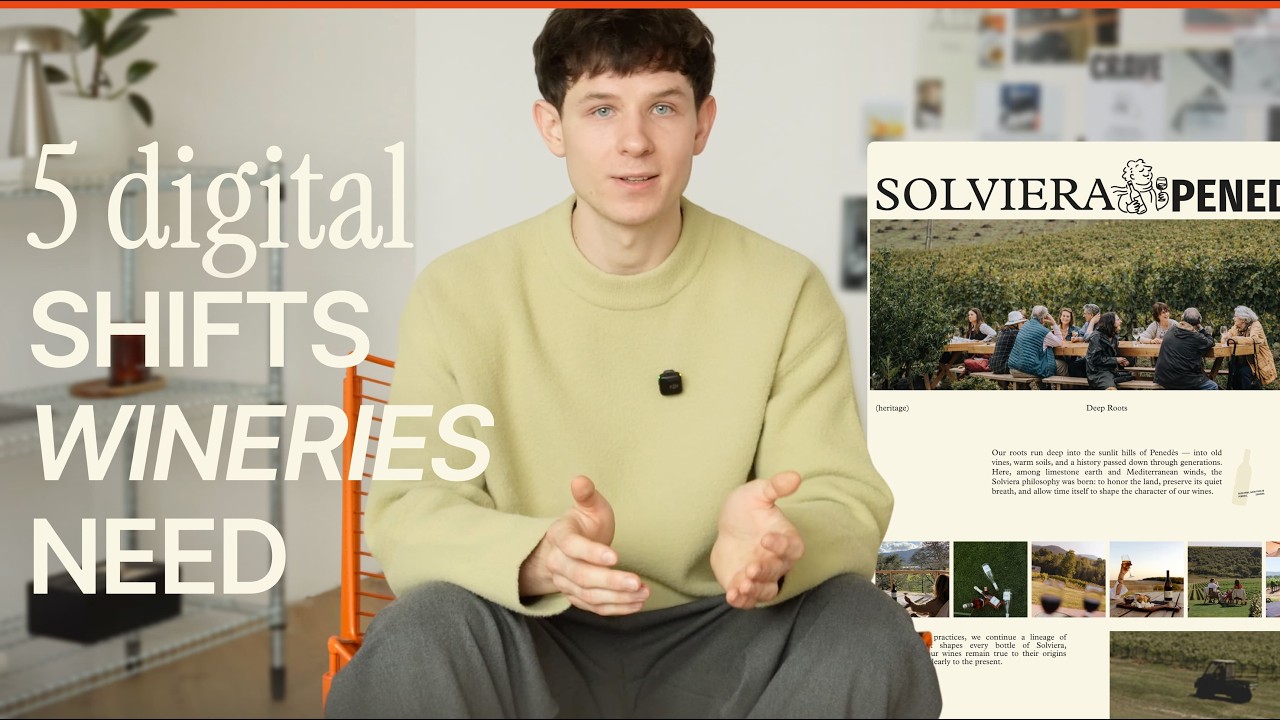
One of these studies is our concept for Solviera, inspired by the Penedès region.
In this project, we explored themes of earth, light, seasonality, and craftsmanship: deep tones, bold typography, slow transitions between sections, a calm palette, and a sense of respect for the region’s roots.
It’s not just design — it’s a complete visual narrative, shaped around the aesthetics of slow luxury that define many next-generation European wineries.
.jpg)
3. The Digital Ecosystem of a Winery: Key Elements for 2026–2030
A winery’s digital ecosystem is a simple but well-structured foundation where every element works together to elevate the brand and support different international audiences.
It’s built around a modern website — a space that brings together the core materials of the brand: its story, wine collections, B2B resources, catalog, and presentations.
And importantly: this is not about doing everything at once.
Digital growth is gradual and intentional. A winery can start with one or two priority elements and expand the system over time, when the business is ready.
Below are the core components most wineries choose from — each can become the first, most strategic step.
3.1. The Story Page — Origin, Philosophy & Atmosphere
This is where a winery reveals its roots and identity:
- origin and heritage
- philosophy
- values
- connection to the land
- seasonality and craftsmanship
- visual aesthetic
It creates emotional resonance and helps audiences understand the winery on a deeper level.
3.2. The Wine Collections Page
A clear, minimal and structured way to present the portfolio:
- varietals
- tasting notes
- recommendations
- bottle photography
- vineyard map for each wine (where relevant)
- technical sheets for sommeliers and retail partners
This section allows both consumers and professionals to quickly understand the offering.
3.3. The B2B Area for Partners & Importers
A compact but essential space that simplifies communication with international markets.
It can include:
- full assortment with characteristics
- supply conditions
- certifications
- production volumes
- PDF or web catalog
- media assets
A well-organized B2B section saves time and signals professionalism.
3.4. The Digital Catalog (Web Page or Micro-Landing)
A modern alternative to heavy PDFs.
Key advantages:
- mobile-friendly
- always up to date
- easy to edit
- aligned with the visual identity
- instantly accessible from any country
A digital catalog makes the winery easier to understand and more approachable for partners.
3.5. Digital Presentation for Trade Fairs & Tastings
This can be a micro-landing or a mini-site.
A simple flow:
QR → story → collections → technical sheets → contacts
It replaces PowerPoint with something lighter, clearer and more contemporary — a format that works especially well at international events.
4. A Step-by-Step Growth Roadmap for Wineries Through 2030
Digital growth for a winery is a journey — not something that needs to be completed all at once.
What matters is having a clear direction and moving forward step by step, gradually strengthening the brand and expanding its international presence.
Below is a simplified roadmap that helps visualize the full trajectory.
In practice, every winery’s path is unique — shaped by its priorities, scale, market, and readiness for digital transformation.
STEP 1. Refresh the Visual Identity
Clarify the winery’s visual language and express its atmosphere, roots, philosophy, and character — so that the digital presence speaks the same language as the winery itself.
STEP 2. Build a Modern Digital Home — a website that tells the story beautifully and clearly
- Pages about the winery, its collections, and its winemaking approach.
- An intuitive structure.
- Strong visual aesthetics.
- Mobile-first.
- Multilingual.
- A space that feels premium and effortless for any audience.
STEP 3. Create a Digital Catalog
Up-to-date collections, varietals, tasting notes, and characteristics — presented in a way that is easy for both professionals and consumers to navigate.
STEP 4. Develop a Digital Presentation for Partners & Trade Fairs
A micro-landing or interactive page that replaces PowerPoint and makes presentations sharper, faster, and more relevant.
STEP 5. Set Up Basic Marketing Communication
Light, unobtrusive updates: news, seasonal notes, events, tasting notes — enough to keep the brand “alive” and visible without overwhelming the team.
STEP 6. Gradually Introduce CRM Tools
A future step: managing inquiries, booking tastings, and automating communication with partners or tourists.
It’s optional in the early stages and can be added when the winery is ready.
STEP 7. Expand into International Markets
With strong materials, a clear structure, and a modern digital identity, entering new markets becomes a natural and achievable step.
► Digital is a Path — Not a Project
This roadmap is not a checklist — it’s a direction.
Each winery can start with the most important element: its visual identity, key website sections, the catalog, or the presentation.
Everything else can be added gradually, at a pace that fits the brand.